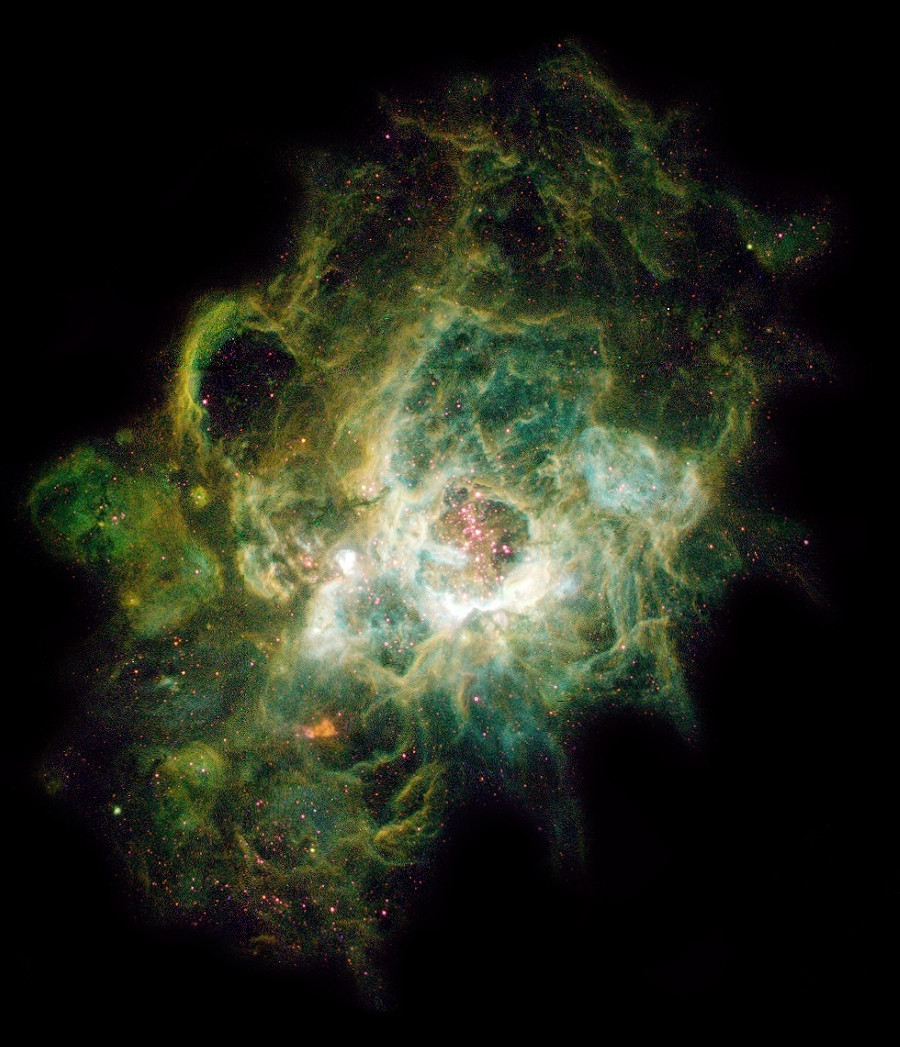
The above star forming nebula NGC-604, looks a lot like the nebula of Star Bursts, but whereas the size of these planetary nebulae can be a few light years across, this nebula is more than 1,500 light years across and is situated in another galaxy (Triangulum), nearly 3 million light years away. The bright centre of over 200 massive new stars (15-60 times bigger than our sun), is ionizing the gasses in the nebula making it glow.
The mixing that goes on to create us has already started even before a solar system such as ours is created. Amino acids—the molecules necessary to create life, can form in the interstellar medium as also can other complex organic molecules. Life and intelligence is inevitable and probably guaranteed to happen on at least one planet in every solar system.
~
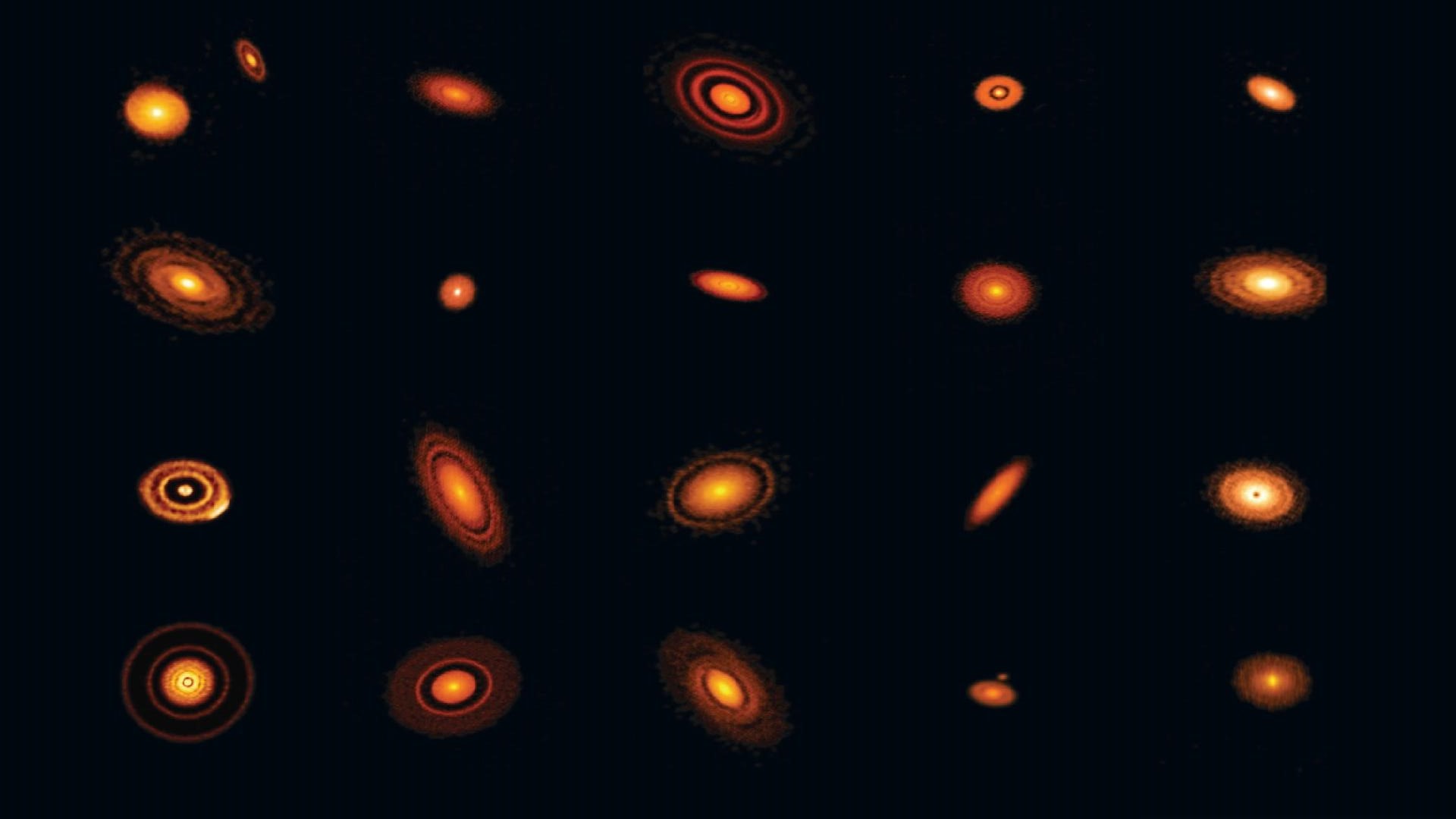
Protoplanetary Disks
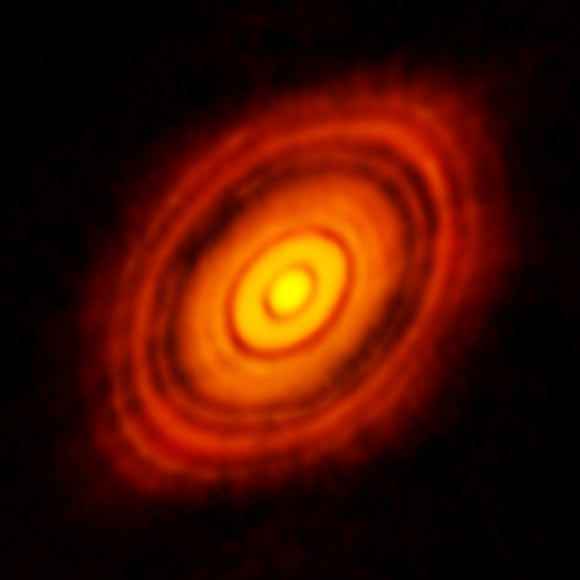
HL Tauri Image Credit: Atacama Large Millimeter Array
Less than a 100,000 years old, this star is surrounded by a protoplanetary disk of material, out of which planets are forming, carving out their orbits within the plane. The Earth and Sun relationship can be seen to be closer to a sibling analogy than a child and parent one. We were born from the same material of the sun and still sit within its atmosphere called the solar wind. The material which circumnavigates new stars is full of water and organic molecules, the ingredients necessary to form life. The planets that form from them have the capability for life built into them. This is practically an embryo for life itself.
•••
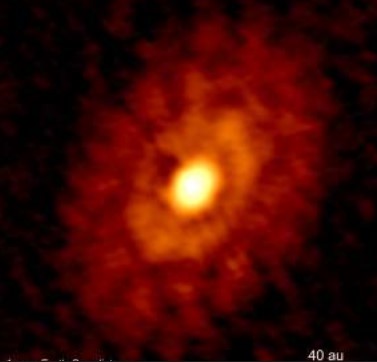
IRS 63 Image Credit: Atacama Large Millimeter Array
Less than a 500,000 years old, this protoplanetary disk is showing the star and its planets forming simultaneously. Roughly the same size as our solar system, it is estimated to contain enough material to make about 150 Earths. It has been discovered that the basic building blocks for RNA and the creation of life are in the very clouds that stars and planets form from. It's a no-brainer that all the necessary stuff is there, because we are here!
•••
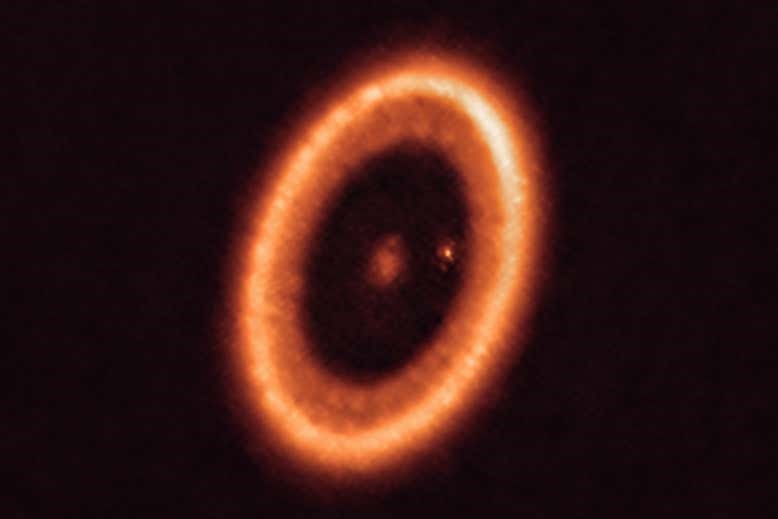
PDS 70 Image Credit: Atacama Large Millimeter Array
This 5 million year old solar system clearly shows a large planet being formed which has carved out a space for itself and has been ascertained to be also forming moons around itself.
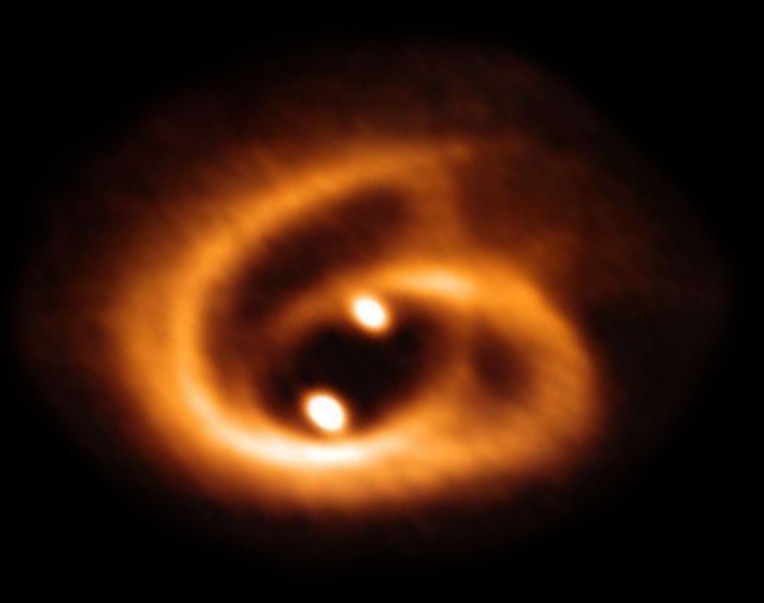
BHB2007 Image Credit: Atacama Large Millimeter Array
The forming of a binary star system. Most star systems are born with 2 or more stars orbiting each other and it is likely that our sun too originally had a companion which has since left home.
~
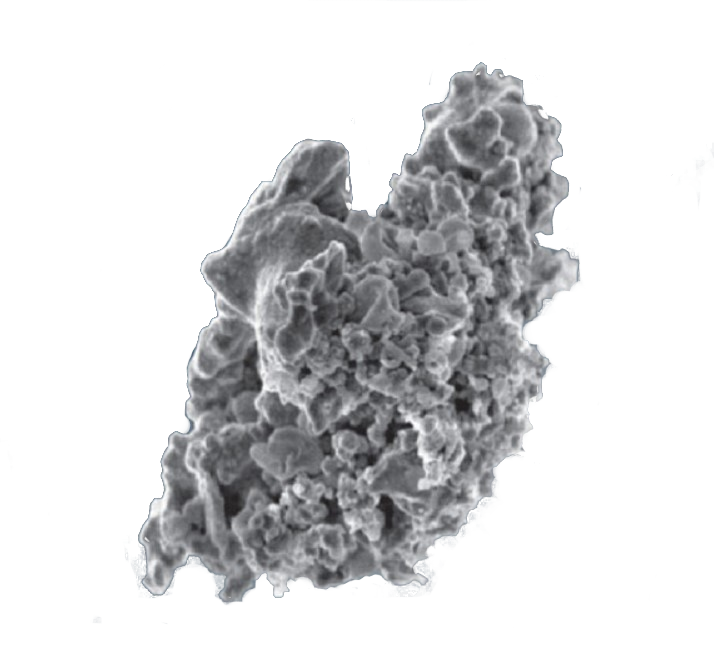
Cosmic dust Image Credit: J. Freitag and S. Messenger
This is cosmic dust ranging in size from 1/10th to 10 times the size of a particle of smoke and made up of carbon, silicon, oxygen, nitrogen, nickel or other elements that have previously been fused in the core of stars and blasted out and spread far and wide into the mixing bowl of the universe, to eventually re-congeal into us and the gadgets that we make to play with and which we are using now to examine the universe and are the universe doing this.
~
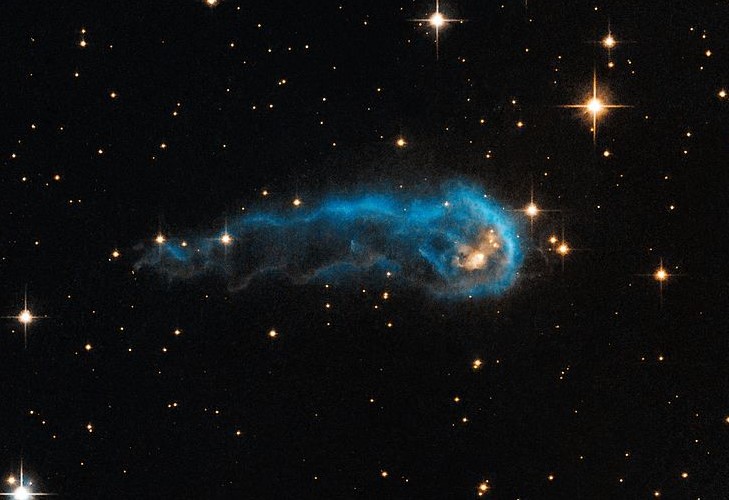
Protostar IRAS 20324+4057 Hubble Space Telescope
A light year in length and made up of dust and interstellar gas, the head of this is a protostar forming. It is getting blown away by the radiation from a group of newly formed stars 12 light years to its right and off the picture.